

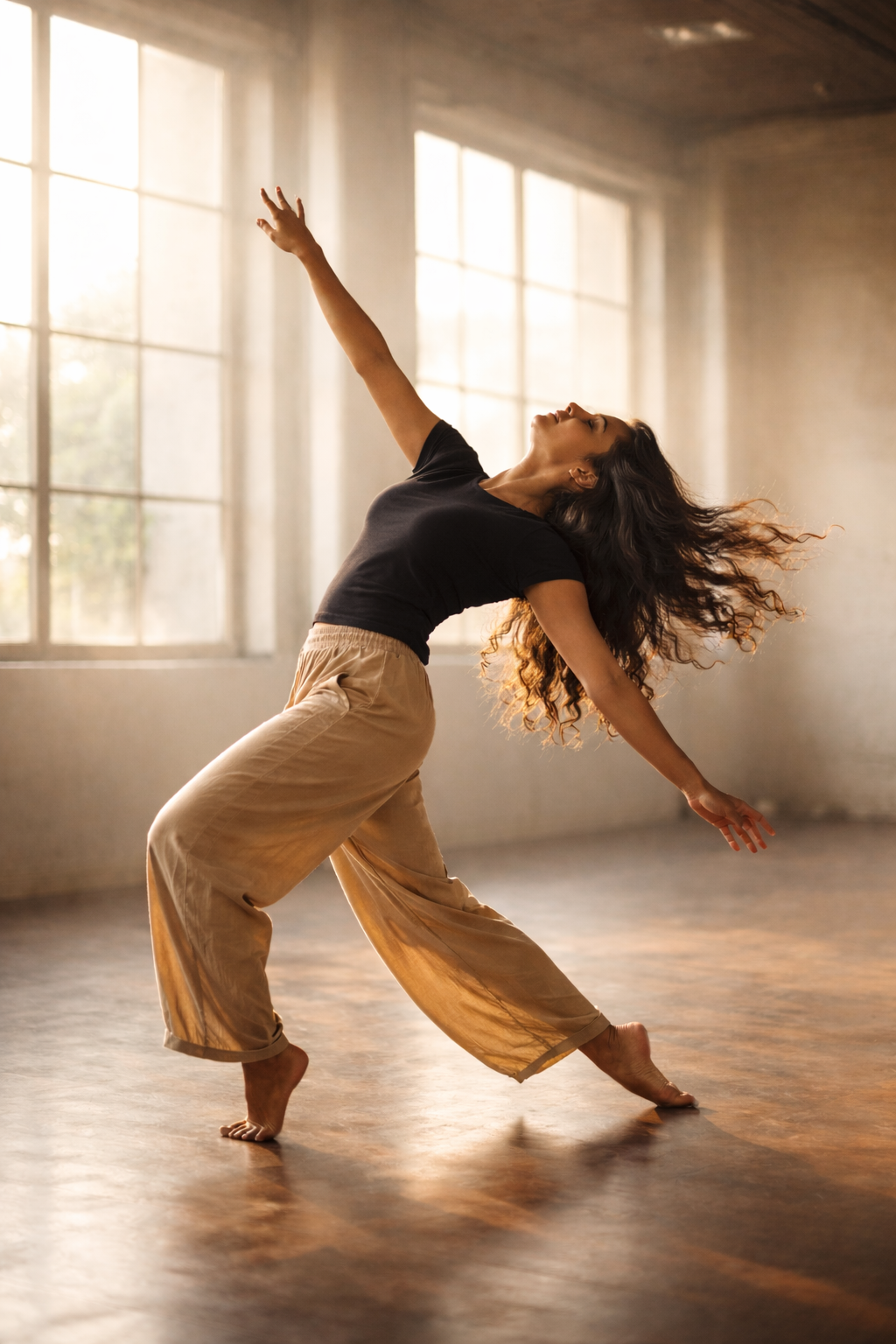
In the previous edition, we came to know how dancing nourishes the body, mind and emotions. Now in part 3 let us know about modern dance and its wellbeing.
Modern dance is a broad and evolving dance form thatintegrates diverse cultural influences and situational expressions, particularly those that developed in Western societies. It emphasizes freedomof movement, creativity, and full-body engagement. Modern dance plays asignificant role in promoting physical, emotional, and mental well-being.
The movements in modern dance are often energetic anddynamic, involving the coordinated use of the entire body. Subtle variations inrotations, head movements, stretching, abdominal control, leg and arm actions, footwork, lifts, balances on the toes, and expressive gestures keep the bodyactive and alert throughout the day. Many modern dance forms also incorporateelements of gymnastics, aerobics, jumps, footwork, and partnered movements, making them both physically demanding and visually captivating.
Regular practice of modern dance contributes to goodhealth by:
· Sharpening memory,
· Promoting quality sleep,
· Increasing stamina and muscle strength,
· Supporting the nervous system,
· Improving flexibility,
· Stimulating appetite,
· Boosting immunity,
· Enhancing blood circulation, and
· Lowering the risk of cardiovascular issues.
Major Typesof Modern Dance and Its Psychological benefits:
Moderndance includes a wide variety of styles that have evolved across differentregions of the world. Forms such as Ballet, Jazz, Hip-Hop, Break Dance, Zumba,Salsa, Belly Dance, Boogie-Woogie, and otherswhich reflect the cultural identity, rhythm, and expression of the communitieswhere they originated.
Below aresome of the most well-known types of modern dance and their distinctivefeatures.
Ballet
Ballet isone of the most disciplined and graceful dance forms, originating in Italy andlater flourishing in France and Russia. It is built on precise technique,posture, and balance. Dancers perform controlled footwork, elegant armmovements, rotations, stretches, and sustained balancing on the toes. Everymovement is synchronized with music, creating a visual expression of harmonyand storytelling. Iconic ballet productions such as Swan Lake, TheNutcracker, and Romeo and Juliet continue to inspire audiencesworldwide.
Jazz Dance
Jazz dancegrew from African and American dance traditions and is known for its energetic,rhythmic, and expressive style. While it borrows certain technical foundationsfrom ballet, jazz introduces relaxed posture, sharp isolations, lifted heels,and quick leg movements. The style thrives on individuality and musicalinterpretation. Elements of jazz dance are commonly seen in stage shows, musicvideos, and performances by legendary artists like Michael Jackson.
Swing Dance
Swing danceis a lively partner dance performed to jazz music. Popular styles include LindyHop, East Coast Swing, West Coast Swing, and Balboa. Lindy Hop is especiallyrecognized for its fast-paced footwork and continuous flowing motion. Though itappears playful and effortless, swing dance demands coordination, endurance,and strong partner connection, making it both joyful and dynamic.
Zumba
Zumba is ahigh-energy fitness dance that blends Latin rhythms with modern dance andaerobic movements. Though it functions as a workout, it feels like a joyfuldance celebration. Continuous movements of the arms, legs, and whole bodyimprove stamina, coordination, and cardiovascular health while uplifting moodand reducing stress.
Psychological Benefits of Modern Dance
Modern dance is more than an art form it is a powerful tool forpsychological well-being. The fluid movements, rhythm, and expressive patternscreate a deep connection between the body and mind, positively influencing ouremotional and mental health.
One of the key benefits of modern dance is its impact on theparasympathetic nervous system, the part of the body responsible for relaxationand recovery. When this system is activated, the body shifts away from stressmode. As a result, cortisol levels (the stress hormone) decrease, helping toreduce anxiety and emotional tension. Over time, this strengthens resilience.
Dance also stimulates the release of important neurotransmitters such asdopamine, serotonin, and oxytocin. These “feel-good” chemicals improve mood,enhance motivation, and create a sense of emotional balance. This naturalbiochemical boost explains why people often feel lighter, happier, and moreenergized after dancing.
Partner and group dance forms offer additional psychological advantages.Coordinated movements improve motor skills, body awareness, and cognitivefunctioning. Planning steps, synchronizing with a partner, and performingmindfully strengthen concentration and executive functioning skills such asattention, timing, and decision-making.
Another important benefit is the social connection dance encourages.Being part of a group fosters belongingness and strengthens relationships. Thissocial bonding enhances self-esteem and promotes a sense of community support.
Conclusion
Moderndance is not only a creative expression but also a powerful pathway to holisticwell-being. It strengthens the body, sharpens the mind, regulates stresshormones, and enhances emotional balance through the release of positiveneurotransmitters. It builds resilience, improves focus, and nurtures socialconnection. In essence, modern dance unites physical vitality, mental clarity,and emotional harmony making it a meaningful practice for a healthier and morebalanced life.
Stay tunefor 4th part, the impact of the participants and their wellbeing.
