

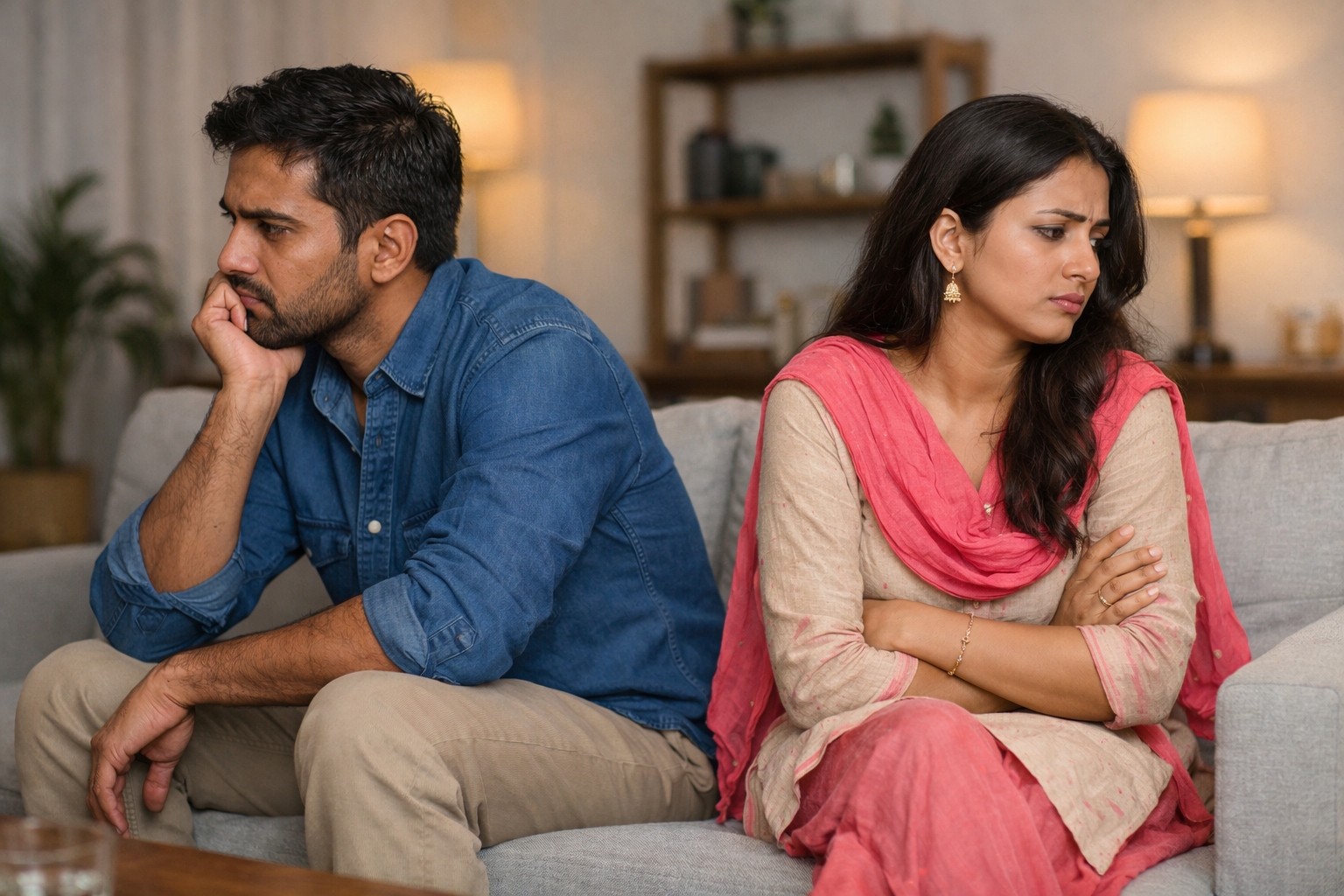
It often starts with small things.
One partner sends a message and keeps checking their phone. The other one sees the message, feels overwhelmed and replies later. By the time both of them speak, both are emotionally charged. One might be feeling ignored, while the other one might feel pressured. Or maybe, there are times when you have been reassured by someone you love, and you still feel unsettled. You feel that taking space from the conversation might make you feel better, but it only makes you feel more guilty, tense or misunderstood afterwards. It can feel like stubbornness on one’s part, but it is often something much deeper. These moments do not feel significant from the outside, but over time, it shapes how safe or unsafe people can feel in their relationships. You might not even recognize this in your own relationship at first, you may have only noticed it in couples around you.
What couples most often don’t realize is that they are not fighting each other, but they are caught in a pattern. In my work as a couples counsellor, I see this dynamic play out between many partners with anxious -avoidant attachment styles. One partner longs for reassurance, emotional availability and closeness. And the other one values independence, emotional space and internal regulation. Individually, none of these needs are wrong. But when together, it creates a painful cycle of exhaustion.
How does the cycle usually look ?
The anxious partner senses emotional distance through various behaviors or gestures of the partner. It can be through delayed replies, less affection or emotional withdrawal. These behaviours trigger fear inside them : “ Am I losing you?” And in response, they reach out more, they ask more questions and they constantly seek reassurance. They also want to talk things through immediately.
The avoidant partner, on the other hand, who is already feeling emotionally stretched, looks at this behaviour as pressure. They may feel overwhelmed by the constant questioning, or feel criticized or inadequate. And in order to protect themselves (as a defense mechanism) they start running away from their partner, becoming quieter, distracted or emotionally unavailable.
And this withdrawal heightens the anxious partner’s fear, leading to even more pursuit of the other one. Over time, both partners start feeling unheard, misunderstood and emotionally unsafe around each other.
What is heartbreaking is that both are trying to feel secure, just in opposite ways. While the anxious partner interprets distance as a rejection or lack of love; the avoidant partner experiences the emotional chase as control or intrusion into their emotions. Neither’s intention is malicious. Even then, each reaction does reinforce the other one’s fear. Over time, this “pursuer-distancer dance” can make couples feel stuck, resentful towards each other, and at the same time, emotionally drained; despite caring deeply for each other.
A very common frustration in an anxious-avoidant relationship can sound like :
The anxious partner says, “I keep asking for reassurance, but it never really calms me.”
The avoidant partner says, “No matter how much space I take, it never feels like enough.”
Both end up feeling helpless, like nothing they do actually works.
The Anxious Partner’s Experience
For the anxious partner, reassurance is not about neediness; it’s about emotional regulation. When connection feels uncertain, the nervous system stays on high alert. Words of comfort may soothe temporarily, but the relief fades quickly because the underlying fear remains unaddressed. This can lead to repeated questions, checking behaviors, or emotional intensity; not because reassurance was insincere, but because it wasn’t emotionally attuned.
The Avoidant Partner’s Experience
For the avoidant partner, distance is often the only way they know how to calm themselves. Emotional closeness can feel overwhelming, especially if they’ve learned very early in life that relying on others is unsafe or disappointing. Taking space is not about punishing the other partner. It’s about self-preservation. Yet, the more they withdraw, the more unsafe the anxious partner feels; creating a loop where neither person’s strategy truly works.
And so, both begin to feel like they are constantly trying, yet constantly failing. The anxious partner starts believing that they are “too much”. The avoidant partner starts believing that they are “never enough”. Slowly, the relationship starts to feel like a tug of war. Where love is present, but their safety fluctuates. And where connection is desired, yet difficult to maintain.
If you have ever witnessed this in relationships around you, or maybe even in your own, you would notice that arguments are rarely about what is being discussed. It is often about how partners feel during the conversation. One feels unheard. The other feels misunderstood. One wants to stay and solve it, the other needs space to think and breathe. Both are hurting. Both are only trying to protect their relationship in a way they know how.
So, what helps to break this cycle?
It begins with awareness. Not of who is right and who is wrong, but of emotional patterns.
In therapy, I often try to slow down these conversations with couples. We look beyond the words and try to understand the feelings beneath those words. Instead of reacting to each other’s defenses, we learn to understand the fears behind them.
A few things that can help couples navigate this dynamic are:
Healing this pattern is not about asking one partner to change who they are, but about helping both partners move towards each other with understanding rather than fear.
Because when both feel safe, closeness doesn’t overwhelm, it nurtures. And space doesn’t create distance, it allows breathing room.
If parts of this felt familiar, take a moment to breathe. You’re not alone, and this pattern doesn’t mean you’re incompatible or broken. It simply means the relationship is asking for awareness, compassion, and new ways of connecting. Sometimes, all it takes is slowing down enough to listen beyond the surface to the tender places inside that are longing to feel seen, heard, and held differently.
Healthy love is not the absence of conflict, but it’s learning to turn toward each other even when fear tells you to turn away.
